
Errors in exam grading prompt teachers to file complaint with Ombudsman – Portugal Resident
Just as education minister Fernando Alexandre faces further grilling by a parliamentary standing committee, teachers movement MetaProf has filed a formal complaint against his ministry with the Ombudsman Luísa Neto, over now well-documented failures throughout the digital grading process for national exams.
In a statement, the movement explains that “what is at stake is not just technical failures, but the absence of mechanisms that guarantee equal treatment and accountability” in the process.
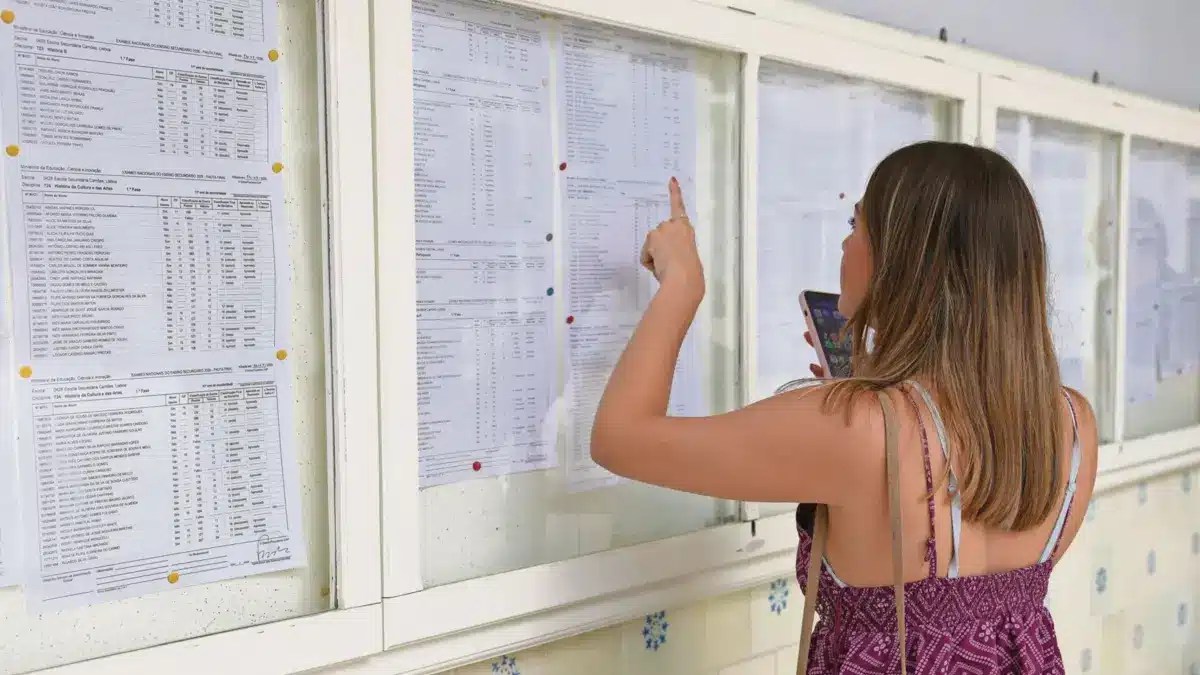
For the first time this year, nearly 300,000 national secondary school exams were assessed digitally, but the process experienced several technical glitches, forcing the release of grades to be postponed for some days.
Following the identified problems – some of which remain unresolved, with a number of students still lacking access to their exams – MetaProf appealed to the Ombudsman to demand answers.
In a complaint targeting the Ministry of Education, Science and Innovation (MECI), the National Examination Board (JNE), and the Institute of Education, Quality and Evaluation (EduQA), teachers are contesting the lack of information provided by the supervisory body.
Specifically, they refer to a set of questions submitted to EduQA regarding the functioning of the platform used to grade the exams, to which they never received a response.
The movement also points to the “asymmetry in the right to access exam results” between secondary school students, who have been given access to digital versions of their graded exams, and students in the third cycle of basic education, who do not have this option.
Addressing the Ombudsman, MetaProf questions whether this asymmetry violates the principle of equality enshrined in the Constitution of the Portuguese Republic, and suggests that Luísa Neto consider “raising the issue of the constitutionality of the rule in question”.
Teachers also mention the absence of audit mechanisms in the digitisation and electronic grading process of exams, recalling cases of reassignment of exams without exclusivity and closure of error reports without audit records.
The movement advocates for the creation of a mechanism that is accessible to grading teachers, students, and parents, as well as the “adoption of consistent institutional communication about the nature and extent of identified failures.”
The Minister of Education has acknowledged the problems, but assures that no student will be ‘prejudiced’. This is a regular assurance, in spite of several media stories detailing students who have indeed been prejudiced – in one case, the parents of the student have resorted to a legal challenge to force EduQA to actually find the missing pages of their son’s Portuguese exam.
As a result of all the dramas, authorities decided to postpone the release of the first phase results to July 17, but grades were only posted in schools that evening, and many students had to wait a few more days to find out their results.
The second phase of the national exams also started later, taking place between July 21 and 24.
Despite these delays, the Ministry maintained the application schedules for the first phase of the national entrance exam for higher education, which ends on August 6 (Thursday), and created a special exam period, which will take place between September 3 and 8.
Source material: LUSA

/https://thumbor.globoi.com/unsafe/fit-in/1280x720/s01.video.glbimg.com/deo/vi/60/13/14611360?w=768&resize=768,0&ssl=1 "Policial Federal aposentado recebia informações vazadas ilegalmente mesmo após ser preso")


